
You built the funnel. Traffic is coming in. People are clicking. And yet the sales just aren't there.
It's one of the most frustrating feelings in online business. You followed the steps, you set up every stage, and somewhere between the first click and the checkout, people quietly disappear.
The good news? A funnel that isn't converting is almost never broken everywhere. It's leaking in one or two specific places. In this post I'll show you how to find those leaks and how to fix them. If you haven't built your funnel yet, start with our guide to the 8 stages of a sales funnel and how to build one, then come back here once it's live.
Think of Your Funnel as a Leaky Bucket
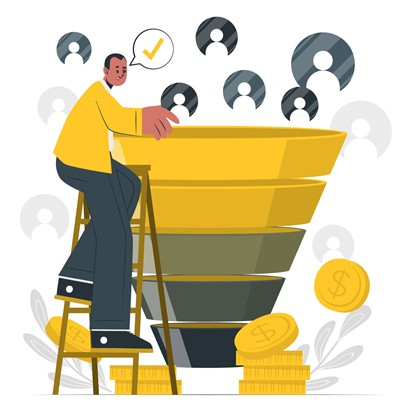
Every funnel loses people. That's normal and it's fine.
The problem is when you lose far more people at one step than you should. Pouring more traffic into a leaky bucket doesn't fix it. It just makes the leak more expensive.
So before you spend another dollar on ads, find the hole.
Step One Is to Find Where People Drop Off
Guessing is the most expensive way to fix a funnel. Numbers are cheaper.
Look at each step and write down how many people arrive and how many move on to the next step. You're looking for the biggest drop.
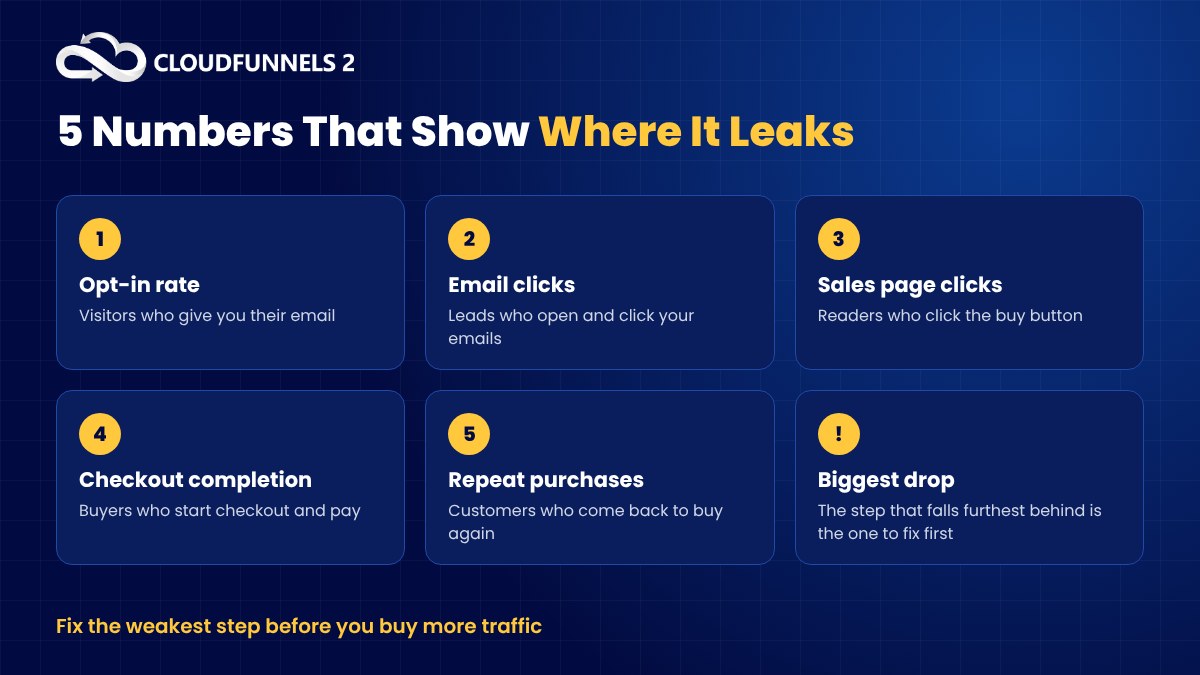
- Landing page to opt-in. How many visitors give you their email?
- Email opens and clicks. Are your leads actually reading and clicking?
- Sales page to checkout. How many readers click the buy button?
- Checkout to purchase. How many who start the checkout actually pay?
- First purchase to second. Do buyers ever come back?
There's no universal "good" number for each one. It depends on your price, your market and where the traffic comes from. What matters is spotting the step that's clearly weaker than the others, then fixing that step first.
Got it? Good. Now let's look at the most common leaks and what to do about each one.
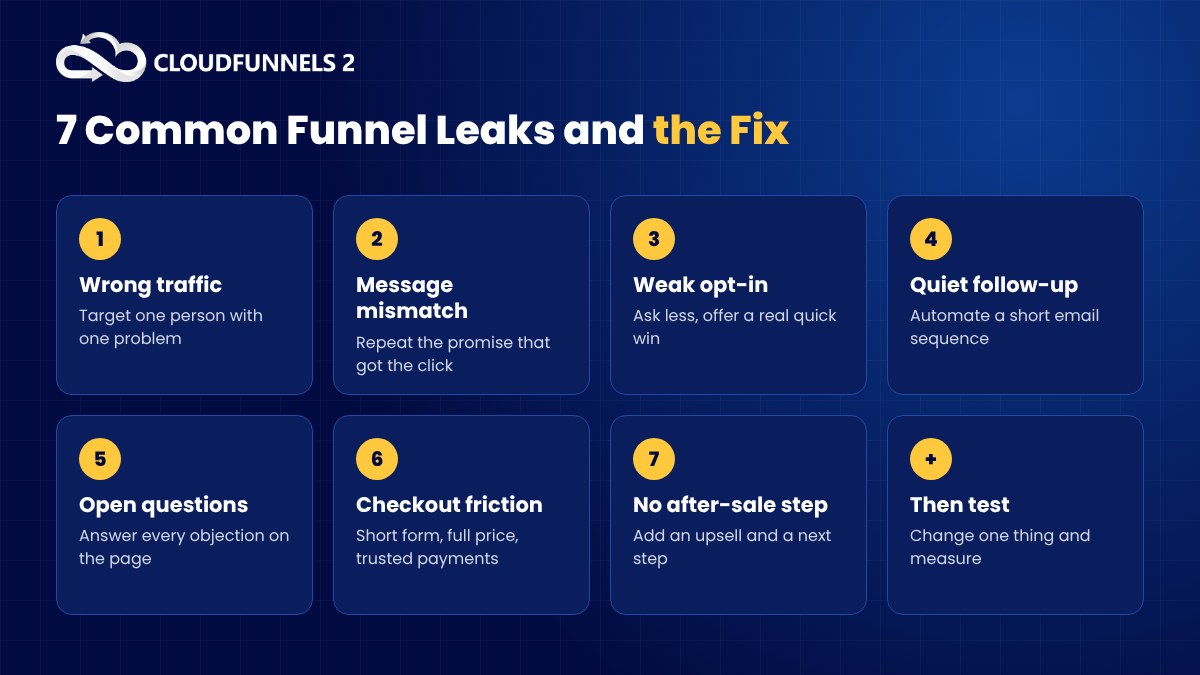
Leak 1. You're Attracting the Wrong People

Sometimes the funnel is fine. The visitors just aren't the right visitors.
If lots of people land on your page and almost nobody opts in, ask where they came from. A viral post or a broad ad can send you thousands of curious people who were never going to buy.
The fix is to tighten your targeting. Speak to one specific person with one specific problem in your ads and posts. Fewer clicks from the right people beat lots of clicks from the wrong ones.
Leak 2. Your Landing Page Doesn't Match the Promise

Someone clicks an ad about "easy meal plans for busy parents" and lands on a page about "transforming your health journey."
Close enough? Not to the visitor. They feel lost, so they leave.
Make sure your headline repeats the promise that got the click, in almost the same words. Then make the next step obvious. One clear headline, a short list of benefits and one button.
Leak 3. Your Opt-in Asks Too Much or Offers Too Little
Long forms kill opt-ins. If you only need an email address, only ask for an email address.
The other side is the lead magnet itself. "Subscribe to my newsletter" is not an offer. A checklist, a template, a short video lesson or a calculator that solves one small problem right now is.
Ask yourself honestly. Would you trade your email for this?
Leak 4. Your Follow-Up Goes Quiet
This is the leak almost nobody notices.
People opt in, get one welcome email and then hear nothing for two weeks. By the time the sales email arrives, they've forgotten who you are.
Set up a short sequence that starts the moment someone signs up. Deliver what they asked for. Share a quick win. Tell a story. Answer the big objection. Then make the offer.
Automate it once, and every new lead gets the same experience.
Leak 5. Your Sales Page Doesn't Answer Their Questions
When people read a sales page and don't buy, it's usually because a question went unanswered.
Will this work for me? How long does it take? What if I don't like it? Why should I trust you?
Make a list of every question a hesitant buyer might ask. Then make sure your page answers each one, through the copy, the testimonials, the FAQ and the guarantee.
Real proof helps a lot here. Not invented numbers. Real words from real customers.
Leak 6. Your Checkout Has Friction
Someone clicked "Buy." They want it. And then they leave on the payment page.
That hurts.
Common causes include surprise costs, too many form fields, a slow page and, very often, no payment method they trust or can use. A buyer in one country may not have the card that works for a buyer in another.
Keep the checkout short. Show the full price up front. Offer the payment options your buyers actually use.
Leak 7. Nothing Happens After the Sale
The sale isn't the end of the funnel. It's the best moment to deepen the relationship.
A relevant upsell or order bump can raise your average order without any extra traffic. A thank-you page that tells buyers what to do next reduces refunds. And a simple follow-up sequence brings customers back for their second purchase.
If your funnel stops at the receipt, you're leaving money on the table.
Fix One Leak at a Time
Here's where a lot of people go wrong. They find three problems and change everything at once.
Then the numbers move, and they have no idea why.
Change one thing. Give it enough traffic to see a real difference. Keep what works, undo what doesn't, then move to the next leak.
If your tool supports A/B testing, use it. Showing two versions of a page to different visitors at the same time is the cleanest way to know which one actually wins.
How CloudFunnels Helps You Plug the Leaks
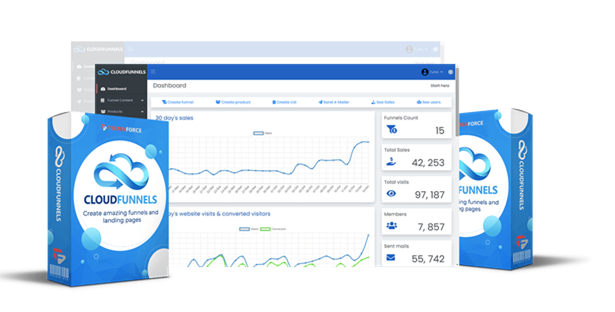
Most of the fixes above get harder when your funnel is spread across five different tools. That's a big part of why we built CloudFunnels.
Your pages, your lead capture and your follow-up all live in one place. You get a drag-and-drop page designer with 180+ templates, built-in AI to rewrite headlines, calls to action and sales copy, and an in-built autoresponder for your email sequences.
For the checkout leaks, it supports 25+ payment gateways and carts from around the world, plus upsells, downsells and order bumps for the after-sale step.
And to find the leaks in the first place, it gives you sales and lead analytics, works with Google Analytics and tracking pixels, and supports A/B testing on the Pro version.
You install it on your own PHP hosting, so you keep control of your pages and your data.
CloudFunnels costs $67 a year.
Final Thoughts
A funnel that isn't converting isn't a failure. It's a puzzle with a few missing pieces.
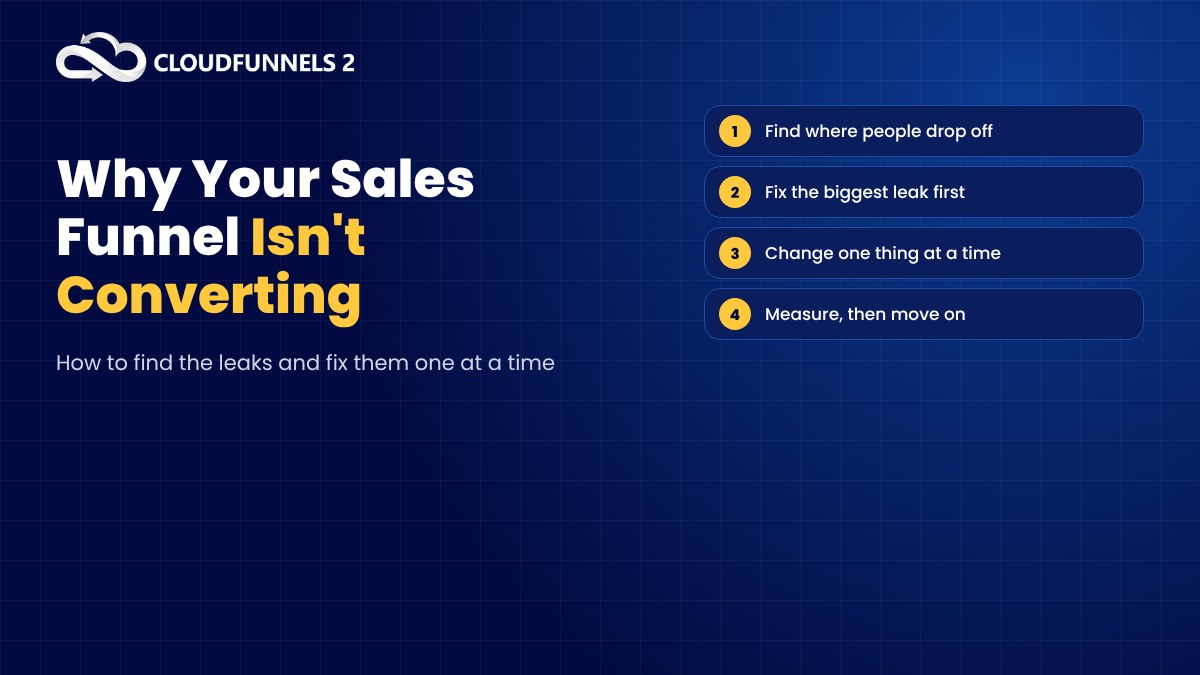
Find the step where people drop off. Fix that one leak. Measure. Then move to the next one.
Do that a few times and the same traffic you have today can turn into a lot more sales.
And if you want a refresher on how a funnel should be put together from the start, read our guide to the 8 stages of a sales funnel and how to build one.
FAQs About Fixing a Sales Funnel
How do I know which part of my funnel is broken?
Track how many people move from each step to the next. The step with the biggest drop compared with the others is usually your main leak.
Should I just send more traffic to my funnel?
Not until you've fixed the biggest leak. More traffic into a leaky funnel only makes each sale more expensive.
How long should I test a change before deciding?
Long enough for enough people to see both versions that the difference is clear. With low traffic that can take a few weeks, so test bigger changes first.
Can a funnel convert well and still not be profitable?
Yes. If your traffic costs more than each customer is worth, conversion isn't the only problem. Upsells, order bumps and repeat sales can help close that gap.